How to Cut a Cigar
A beginner's guide to opening the head of a cigar cleanly: how to find the cap line, which cutters do what, the technique that prevents tearing, and where smokers genuinely disagree.
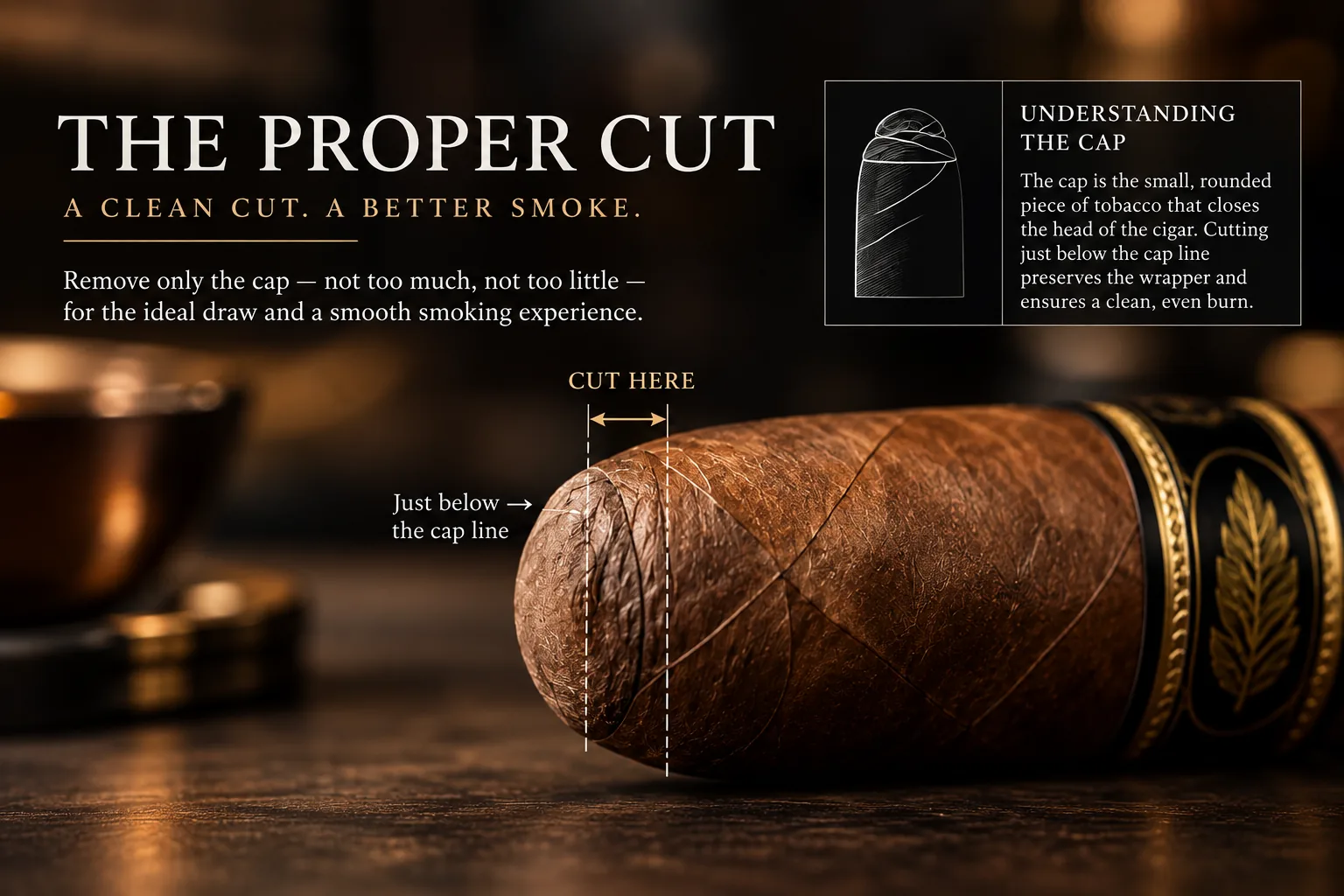
The cap is a small piece of tobacco leaf pasted over the head of the cigar to hold the wrapper down and keep it from unravelling. Cutting is really just the business of removing enough of that cap to let smoke through, without taking so much that the whole wrapper starts to peel back on you. Get it right and the cigar behaves for its entire length. Get it wrong and you spend the smoke picking loose leaf off your tongue.
Find the shoulder before you cut
Hold the cigar up to good light and look at the head. On most handmade cigars you can see a faint seam where the cap leaf ends and the wrapper begins — a slight ridge or a change in the grain. That line is the shoulder, and it is the landmark that matters. You want to cut inside it, taking off the domed top of the cap while leaving the base of the cap intact.
Cut past the shoulder and you have severed the only thing holding the wrapper in place at the head. It may hold anyway. It may also start to unwind after a few minutes, particularly if the cigar has a delicate wrapper or if you clench it in your teeth.
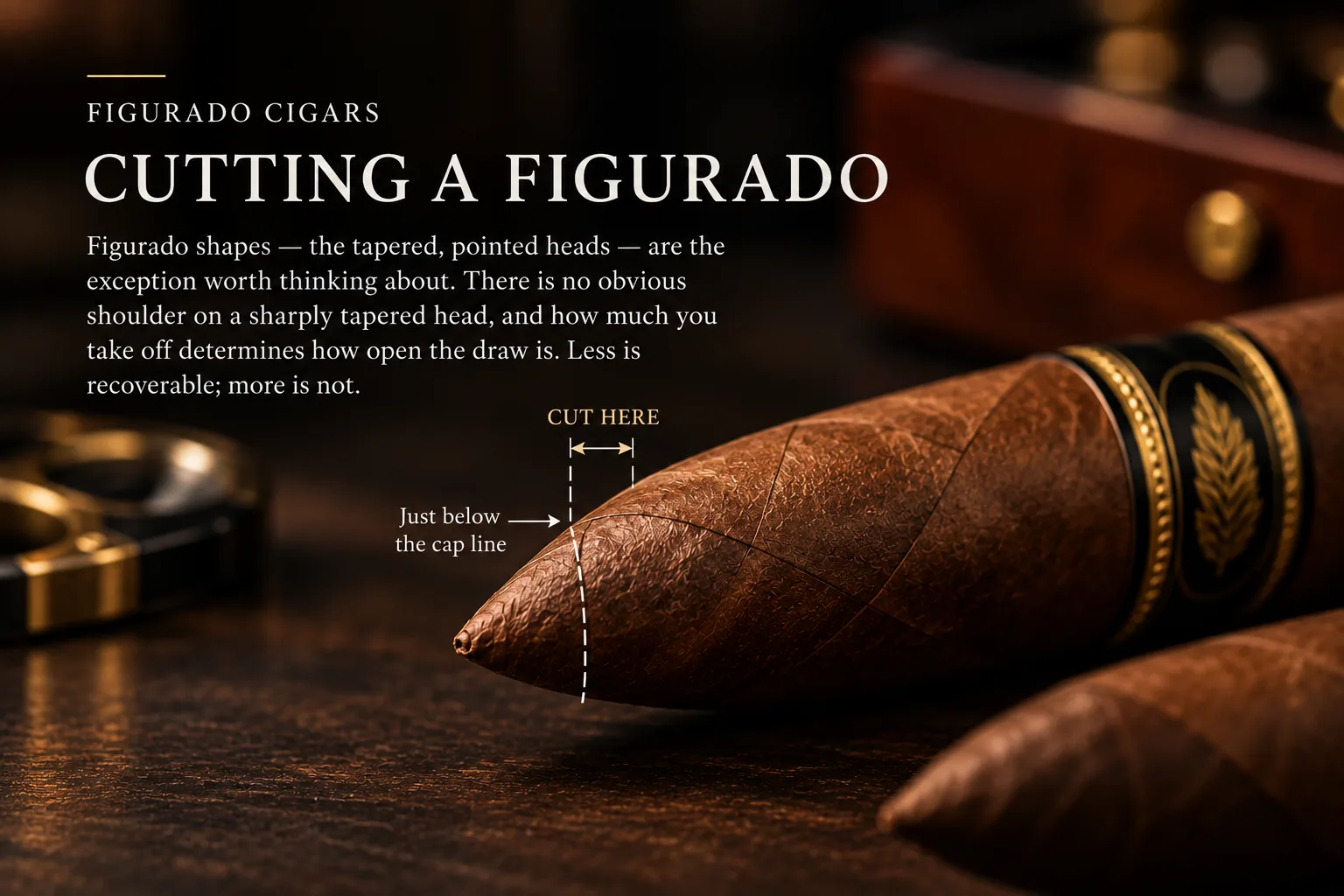
Figurado shapes — the tapered, pointed heads — are the exception worth thinking about. There is no obvious shoulder on a sharply tapered head, and how much you take off determines how open the draw is. Less is recoverable; more is not.
The tools, and what each one actually does
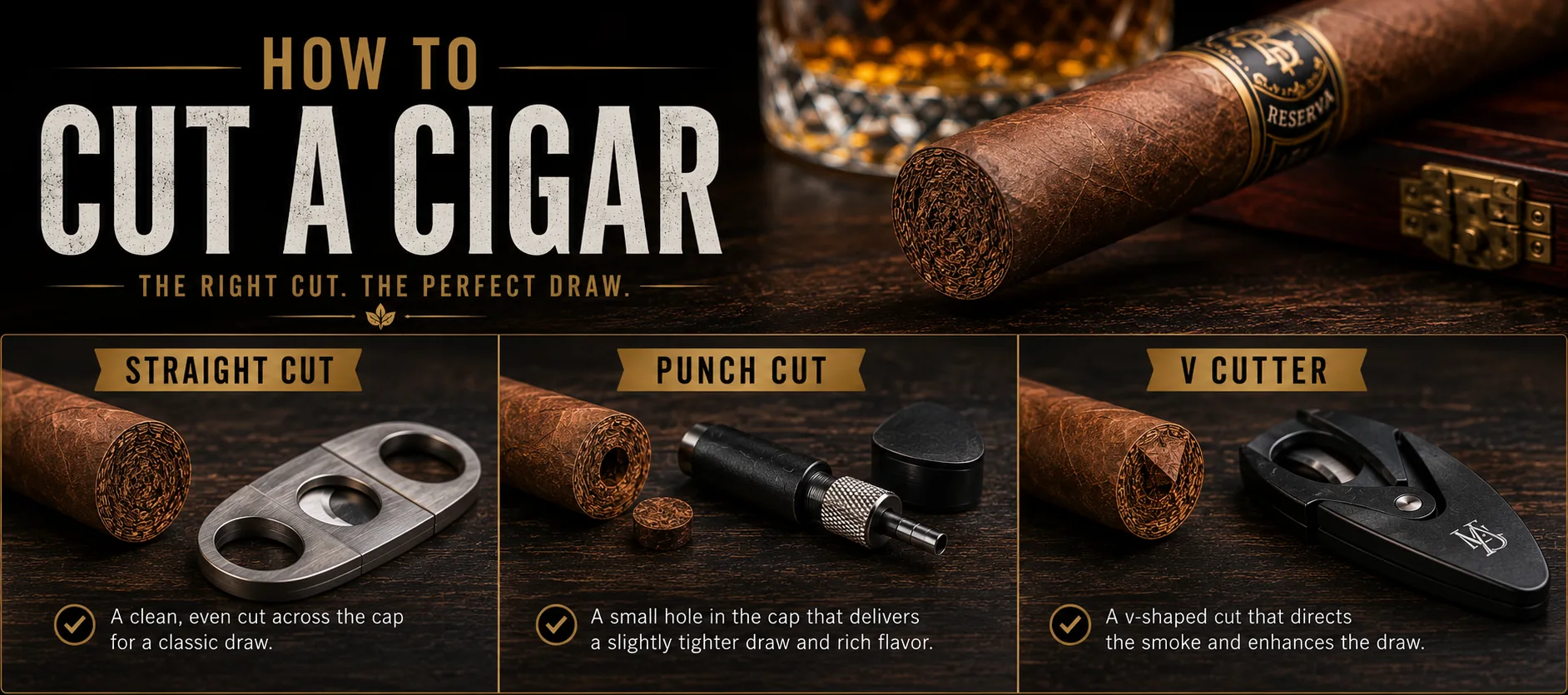
Straight cutters (the guillotine style, single or double blade) remove a flat disc from the top of the head and give you the widest opening. They are the most versatile choice and work on nearly any shape. Double-bladed versions close from both sides at once, which tends to compress the cigar less than a single blade pushing against a fixed backstop.
Punch cutters bore a small circular hole into the head rather than slicing anything off. The cap stays almost entirely intact, so there is very little risk of unravelling, and the smaller opening concentrates the smoke. Punches don't suit tapered heads, and they don't suit cigars with very small ring gauges, where there simply isn't enough face to punch into.

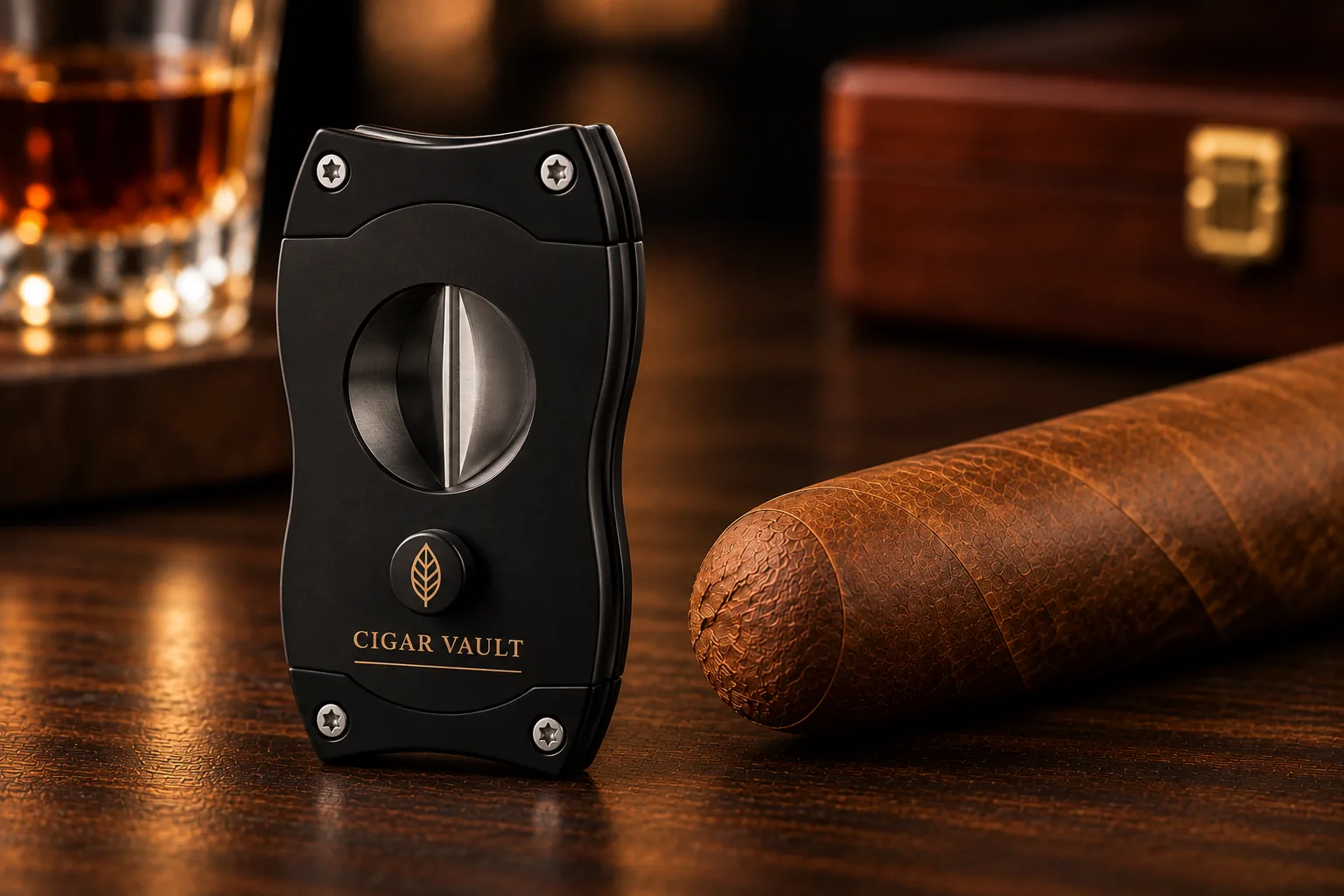
V-cutters (cat's eye) press a wedge-shaped notch into the head. The idea is a larger draw surface without a fully open face. They work well on many cigars and poorly on others; a badly aligned V-cut can crack the head, and some V-cutters bite deeper than the user expects.
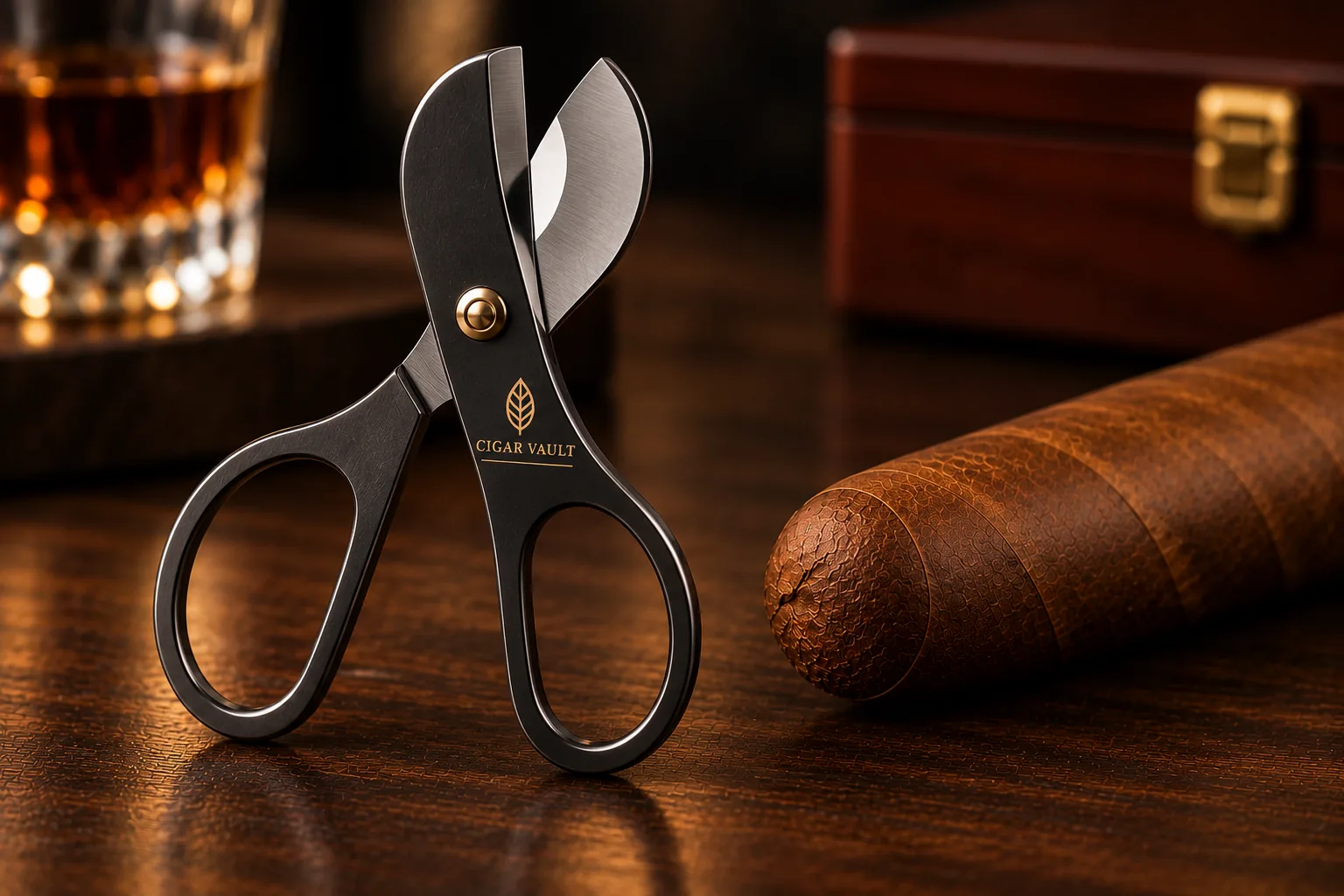
Cigar scissors do the same job as a straight cutter and are pleasant to use, but they demand sharp blades and a steady hand. Dull scissors crush before they cut.
Technique
Whatever tool you use, the principle is the same: sharp blades and one decisive motion. Sawing, hesitating, or squeezing slowly all crush the filler and tear the wrapper instead of shearing it.
Rest the head against the closed blades first, so you can see exactly where the cut will land, then open the blades, seat the cigar to that depth, and close them in a single quick movement. Hold the cigar steady with your other hand rather than letting it wobble. If you are using a punch, press and twist gently as you go in, then twist as you pull out so the plug of tobacco comes with it.
Afterwards, look at the cut face. A clean cut shows tidy circles of bunched filler leaf. Ragged edges, a torn wrapper, or leaf hanging loose mean the blade was dull or the motion was too slow.
Fixing a bad cut
If the wrapper begins to lift at the head, a small amount of cigar glue — or, in a pinch, a dab of saliva pressed firmly against the leaf — will often hold it long enough to finish the smoke. If the cut is too shallow and the draw is tight, you can take a little more off, and this is exactly why cutting conservatively the first time is sensible advice. Nothing puts tobacco back on.
Where smokers disagree
The cut is one of the more argued-over parts of the ritual, and the disagreements are real rather than manufactured.
Some smokers insist the straight cut is the only honest option, because it exposes the full blend and gives an unrestricted draw. Others prefer a punch precisely because it restricts the draw, arguing that a tighter opening slows the smoke and keeps the cigar cooler. Both positions have sensible people behind them, and the difference is noticeable enough that it is worth trying the same cigar both ways.
The V-cut has the most divided reputation. Its defenders point to a broad draw surface with the cap left largely intact; its critics say it channels tar toward one point on the tongue and cracks heads too easily.
There is also no settled answer on how deep is deep. The conservative view is to take the minimum that opens the draw. The other camp argues that a shallower cut leaves cap material in the smoke path and produces an uneven burn at the head. In practice, cigar construction varies enough that the same depth won't behave identically across two different cigars, which may be why the argument has never resolved.